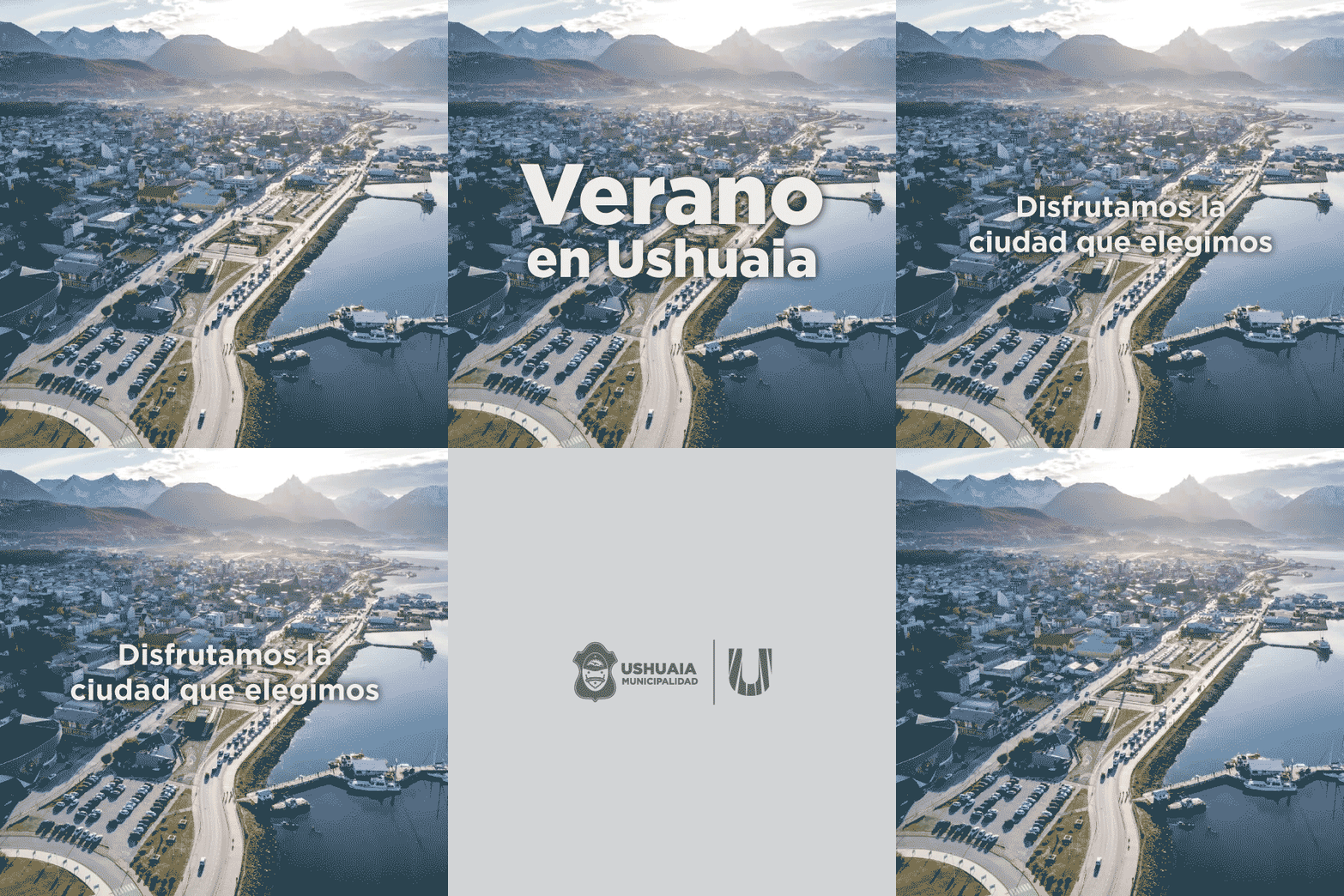
Ushuaia es una promesa de belleza en los confines de la Tierra. Cada año, según el área del Turismo del municipio, cerca de 200 mil viajeros llegan anualmente a la ciudad del «Fin del Mundo» buscando la postal perfecta. Representan el doble de la población estable. Los viajeros quieren ver las montañas nevadas recostadas sobre el Canal Beagle, llegar a la Laguna Esmeralda, internarse en la naturaleza virgen del Parque Nacional, pisar la base del Glaciar Martial. Los que arriban en avión, desde el primer instante quedan hipnotizados. Sin embargo, quienes ingresan por la Ruta Nacional 3 lo primero que ven en el acceso norte es el vertedero municipal, y cómo sobre la basura sobrevuelan en círculos caranchos, chimangos y gaviotas cocineras. Un contraste que, de la noche a la mañana, se convirtió en el falso escenario de una crisis sanitaria internacional.
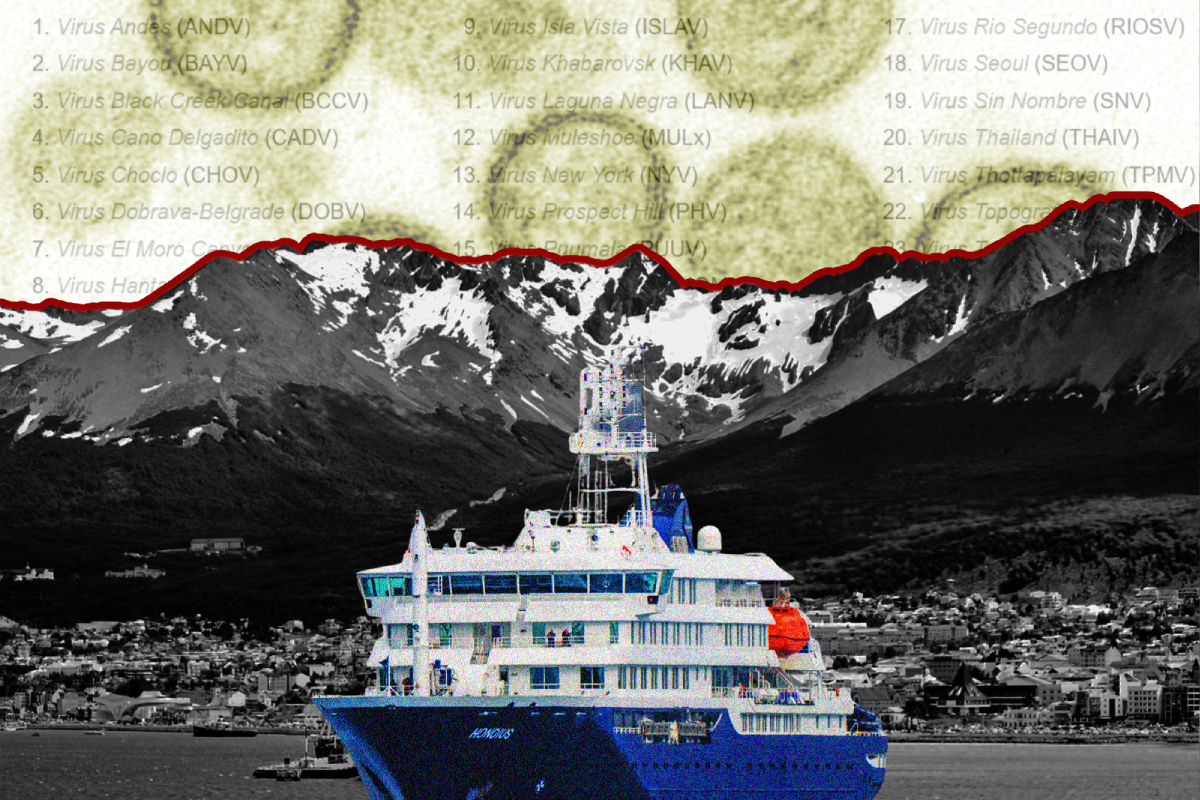
El 1 de abril de 2026, el crucero MV Hondius zarpó desde el puerto de Ushuaia rumbo a la Antártida con 147 personas a bordo. Entre ellas una pareja de neerlandeses que antes de abordar había viajado por Uruguay, Chile y Argentina. Los días previos a iniciar la aventura hacia el Atlántico Sur, apasionados por la observación de aves, quisieron capturar con sus lentes a los carroñeros de la zona y se acercaron a las inmediaciones del vertedero. Esta “experiencia” atrae turistas, pero se realiza sin autorización de entes oficiales. Y en verdad nadie accede al basural, los avistajes de aves se realizan desde los alrededores.
Un mes después se notificó oficialmente a la Organización Mundial de la Salud que en el crucero se habían detectado casos de enfermedad respiratoria aguda grave: hantavirus. Para esa fecha la pareja de neerlandeses, que fue la primera en presentar síntomas, ya había fallecido. Bastó vincularlos con el vertedero para que el mundo encendiera las alarmas. Los medios internacionales y nacionales apuntaron con el dedo a la ciudad, señalándola como el «punto cero» de un brote letal. Radio y Televisión Española habló de “un crucero de lujo convertido en escenario de una crisis sanitaria», el diario El País publicó “Bitácora del ‘MV Hondius’: de Ushuaia a Canarias, diario de a bordo de un brote de hantavirus”. En Buenos Aires, el Gobierno Nacional optó por la inmovilidad y el silencio, dando la espalda a una de las provincias que más divisas genera por el turismo y restándole peso al impacto de la alarma global. Ante el desamparo central, el Ministerio de Salud de Tierra del Fuego se cargó la crisis al hombro.
El lunes 18 de mayo, un equipo de especialistas del Instituto Malbrán aterrizó en la isla junto a una oleada de corresponsales extranjeros enviados a cubrir lo que suponían era una catástrofe sanitaria. Mientras tanto, en la ciudad, cronistas de la zona realizaban esfuerzos para que la noticia alcanzara a medios nacionales y mundiales, tal como se vivía en el Fin del Mundo. El periodista Gabriel Ramonet evaluó en diálogo con EED que “fue una campaña internacional infundada para poner a Ushuaia como eje de un problema que nunca fue, porque por los tiempos de estadía de los neerlandeses no se podrían haber contagiado en Ushuaia”.
Los especialistas llegados del Instituto Malbrán, encargados de la vigilancia epidemiológica, se internaron entre lengas y ñires bajo un clima gélido y hostil que imponía una carrera contrarreloj contra la propia geografía. En los días más cortos del año, las pocas horas de luz solar se volvieron el recurso más valioso. El equipo científico debía aprovechar cada minuto de sol, desde el amanecer tardío hasta el temprano atardecer ushuaiense, para revisar las trampas antes de que la oscuridad copara el terreno. Durante tres jornadas extenuantes, la recolección de muestras biológicas convivió con el viento y la humedad, atípica para la época, pero señal de un cambio climático innegable. El objetivo: encontrar al presunto culpable, el ratón colilargo, transmisor del hantavirus.
El eco del brote mortal resonaba en los monitores de todo el planeta, pero en Ushuaia la realidad corría por un carril diferente. Inmunes al pánico exterior, fueguinos y fueguinas continuaron con su rutina habitual, sin sobresaltos. La vida siguió su curso con absoluta normalidad. No hubo quejas ni escenas de histeria colectiva.
Solo un puñado de medios locales abordó con severidad la gravedad del tema y sus profundas implicancias. El resto de la comunidad compartía una certeza inquebrantable basada en la memoria colectiva: sabían que jamás, en los últimos 20 años, se había registrado un caso autóctono. En la isla, el hantavirus siempre fue una sombra ajena; los escasísimos antecedentes históricos correspondieron estrictamente a personas que se habían contagiado en otras provincias del país y que luego habían retornado a Tierra del Fuego.
Finalmente, las pruebas de laboratorio derribaron la infodemia. Una noticia desalentadora, pero que aclaraba el caso del crucero internacional: el análisis de 144 roedores capturados permitió detectar por primera vez la circulación de hantavirus en roedores de Ushuaia, pero ninguno de ellos era portador de la cepa que desató el contagio en el barco de lujo.
La información oficial del Ministerio de Salud de la Nación señala que “la investigación epidemiológica del brote de hantavirus asociado al crucero MV Hondius, y los análisis serológicos realizados por especialistas del Servicio de Biología Molecular de la ANLIS Malbrán permitieron detectar por primera vez la circulación de hantavirus en roedores de Ushuaia, Tierra del Fuego. Los resultados obtenidos mostraron que cinco ejemplares pertenecientes al género Abrothrix presentaron anticuerpos específicos contra hantavirus”. Sin embargo, se detalló que “la variante viral hallada en los roedores de Tierra del Fuego es diferente de la observada en los casos humanos asociados al brote investigado. De esta manera, la investigación permitió descartar que los roedores analizados hayan sido la fuente de infección vinculada a ese evento”.
Así, hoy es posible saber que en el Fin del Mundo existe hantavirus, pero una cepa nueva, que seguirá siendo analizada en los próximos meses.
Desatada la crisis internacional empujada por medios de comunicación españoles, la reacción corporativa del sector turístico llegó casi veinte días después, un letargo costoso en tiempos de hiperconectividad. “Somos la puerta de entrada a la Antártida; es fundamental llevar tranquilidad”, señaló Juan Pavlov, del Infuetur. Patricio Cornejo, presidente de la Cámara de Turismo, reforzó la defensa colectiva: “Es seguro venir a Tierra del Fuego y es seguro vivir acá”.
“La posibilidad de que ese contagio se haya producido acá era prácticamente nula”, había sostenido oportunamente el director de Epidemiología provincial, Juan Petrina.
La investigación médica no se detuvo. Tras descartar el contagio del crucero en territorio local, el itinerario de los investigadores del Malbrán se extendió hacia los otros puntos geográficos que los pasajeros habían pisado en su trayecto previo antes de embarcar. El rastreo epidemiológico sigue abierto en el mapa para dar con el origen definitivo de la enfermedad: ahora el ojo está sobre Mendoza y Neuquén.
El ex ministro de Salud provincial, doctor Rubén Rafael, fue tajante: “La primera conclusión es que el brote que se produjo en el crucero no tuvo nada que ver con la ciudad de Ushuaia, porque no aparecieron ratones colilargos, que son los que transmiten la cepa Andes. O sea que todo lo que se dijo de que esta pareja de neerlandeses se había contagiado en Ushuaia, en el basural, no es cierto y quedó descartado con el estudio del Malbrán, esa es la conclusión más fuerte”. Agregó que “la próxima temporada veraniega van a volver a recapturar nuevos roedores, para dar seguimiento epidemiológico”.
Mientras tanto, los profesionales de la salud deberán continuar alertas ante cualquier neumonía u otra enfermedad respiratoria poco común, para aplicar sus conocimientos, y en caso de ser necesario, utilizar los kits que dejaron desde el mismo Malbrán, para la detección del virus hanta.
Al pasado 2 de julio no se registraron nuevos contagios en Tenerife, España, donde fueron desembarcados los pasajeros del crucero MV Hondius, y finalmente, la Organización Mundial de la Salud declaró cerrado el brote de hantavirus. Mal que les pese a algunos medios nacionales y extranjeros, el brote de hantavirus que desató una crisis sanitaria internacional no nació en Ushuaia.

Disinformation: The Virus That Struck the End of the World
by Lorena Uribe
In the last 20 years, no autochthonous cases of hantavirus have been recorded in Ushuaia. Yet, following the deadly outbreak aboard the MV Hondius cruise ship, international and national media spread the idea that the health crisis had originated in the city at the End of the World.
July 2026
Ushuaia is a promise of beauty at the edge of the Earth. Each year, according to the municipal Tourism Department, nearly 200,000 travelers arrive in the city of the “End of the World” in search of the perfect postcard. That figure is twice the size of the permanent population. Visitors want to see the snow-capped mountains lying over the Beagle Channel, reach Laguna Esmeralda, venture into the pristine nature of the National Park, and step onto the base of the Martial Glacier. Those arriving by plane are hypnotized from the very first moment. However, those entering via National Route 3 first encounter the municipal landfill at the northern access, where caracaras, chimangos, and kelp gulls circle above the garbage. A contrast that, overnight, became the false stage of an international health crisis.
On April 1, 2026, the MV Hondius cruise ship departed from Ushuaia’s port bound for Antarctica with 147 people on board. Among them was a Dutch couple who had previously traveled through Uruguay, Chile, and Argentina. Days before embarking on their South Atlantic adventure, passionate about birdwatching, they sought to photograph local scavengers and approached the landfill area. This “experience” attracts tourists, but it is not authorized by official agencies. In fact, no one enters the dump itself; birdwatching is done from the surroundings.
A month later, the World Health Organization was officially notified that cases of severe acute respiratory disease—hantavirus—had been detected on the cruise. By then, the Dutch couple, the first to show symptoms, had already died. Linking them to the landfill was enough to set off global alarms. International and national media pointed fingers at the city, labeling it the “ground zero” of a deadly outbreak. Spanish Radio and Television reported “a luxury cruise turned into the stage of a health crisis,” while El País published “Logbook of the ‘MV Hondius’: from Ushuaia to the Canary Islands, diary of a hantavirus outbreak.” In Buenos Aires, the National Government chose immobility and silence, turning its back on one of the provinces that generates the most foreign currency through tourism and downplaying the impact of the global alarm. Left without central support, Tierra del Fuego’s Ministry of Health shouldered the crisis.
On Monday, May 18, a team of specialists from the Malbrán Institute landed on the island along with a wave of foreign correspondents sent to cover what they assumed was a health catastrophe. Meanwhile, local reporters struggled to ensure the story reached national and international outlets, reflecting the reality in the End of the World. Journalist Gabriel Ramonet told EED: “It was an unfounded international campaign to place Ushuaia at the center of a problem that never existed, because given the Dutch couple’s length of stay, they could not have been infected in Ushuaia.”
The Malbrán specialists, in charge of epidemiological surveillance, ventured into lenga and ñire forests under a freezing, hostile climate that imposed a race against geography itself. During the shortest days of the year, the few hours of sunlight became the most valuable resource. The scientific team had to seize every minute, from the late sunrise to the early sunset, to check traps before darkness took over. For three exhausting days, the collection of biological samples was carried out amid wind and humidity—unusual for the season, but a sign of undeniable climate change. The goal: to find the alleged culprit, the long-tailed mouse, transmitter of hantavirus.
The deadly outbreak echoed across screens worldwide, but in Ushuaia reality followed a different track. Immune to external panic, Fuegians continued their daily routines without upheaval. Life went on with absolute normalcy. There were no complaints, no scenes of collective hysteria.
Only a handful of local media addressed the seriousness of the issue and its profound implications. The rest of the community shared an unshakable certainty rooted in collective memory: they knew that in the past 20 years, no local case had ever been recorded. On the island, hantavirus had always been an external shadow; the few historical cases strictly involved people infected in other provinces who later returned to Tierra del Fuego.
Ultimately, laboratory tests dismantled the infodemic. A discouraging finding, but one that clarified the cruise case: analysis of 144 rodents captured revealed, for the first time, hantavirus circulation in Ushuaia’s rodents, but none carried the strain that triggered the contagion aboard the luxury ship.
Official information from the National Ministry of Health stated: “The epidemiological investigation of the hantavirus outbreak associated with the MV Hondius cruise, and the serological analyses conducted by specialists from the Molecular Biology Service of ANLIS Malbrán, allowed the detection for the first time of hantavirus circulation in rodents in Ushuaia, Tierra del Fuego. The results showed that five specimens belonging to the genus Abrothrix presented specific antibodies against hantavirus.” However, it was clarified that “the viral variant found in Tierra del Fuego rodents differs from that observed in human cases linked to the investigated outbreak. Thus, the investigation ruled out that the rodents analyzed were the source of infection connected to that event.”
Today, it is possible to confirm that hantavirus exists at the End of the World—but a new strain, which will continue to be studied in the coming months.
Once the international crisis was unleashed by Spanish media, the corporate reaction of the tourism sector arrived almost twenty days later—a costly delay in times of hyperconnectivity. “We are the gateway to Antarctica; it is essential to bring reassurance,” said Juan Pavlov of Infuetur. Patricio Cornejo, president of the Tourism Chamber, reinforced the collective defense: “It is safe to come to Tierra del Fuego, and it is safe to live here.”
“The possibility that the contagion occurred here was practically nil,” had stated provincial Epidemiology Director Juan Petrina.
The medical investigation did not stop. After ruling out local contagion aboard the cruise, Malbrán researchers extended their itinerary to other geographic points visited by passengers before embarking. The epidemiological tracing remains open, now focusing on Mendoza and Neuquén.
Former provincial Health Minister Dr. Rubén Rafael was blunt: “The first conclusion is that the outbreak on the cruise had nothing to do with Ushuaia, because no long-tailed mice—the ones that transmit the Andes strain—were found. So everything said about the Dutch couple being infected in Ushuaia, at the landfill, is not true and was ruled out by Malbrán’s study. That is the strongest conclusion.” He added: “Next summer season, new rodents will be recaptured to continue epidemiological monitoring.”
Meanwhile, health professionals must remain alert to any pneumonia or other unusual respiratory illness, to apply their knowledge and, if necessary, use the kits provided by Malbrán for hantavirus detection.
As of July 2, no new infections were reported in Tenerife, Spain, where MV Hondius passengers had disembarked, and finally, the World Health Organization declared the hantavirus outbreak closed. Much to the dismay of some national and foreign media, the hantavirus outbreak that triggered an international health crisis did not originate in Ushuaia.