
Milei: del negacionismo a las sanciones
- Durante el Mundial, prohibió exhibir una bandera con la consigna “Las Malvinas son argentinas”.
- Reconoció públicamente el supuesto “derecho de autodeterminación” de los kelpers.
- Sabía que empresas israelíes avanzarían sobre la explotación petrolera en las islas.
- Se autoproclamó “el presidente más sionista del mundo”.
- Incluso llegó a declarar que la Argentina era un “país miserable”, debilitando el mismo suelo que ahora dice defender.
- Hoy, en un giro abrupto, anuncia sanciones contra una empresa vinculada a un país que él mismo defendió con fervor. El discurso cambia, pero la credibilidad se erosiona: no hay coherencia entre sus gestos previos y esta súbita reacción.
El silencio del bloque libertario
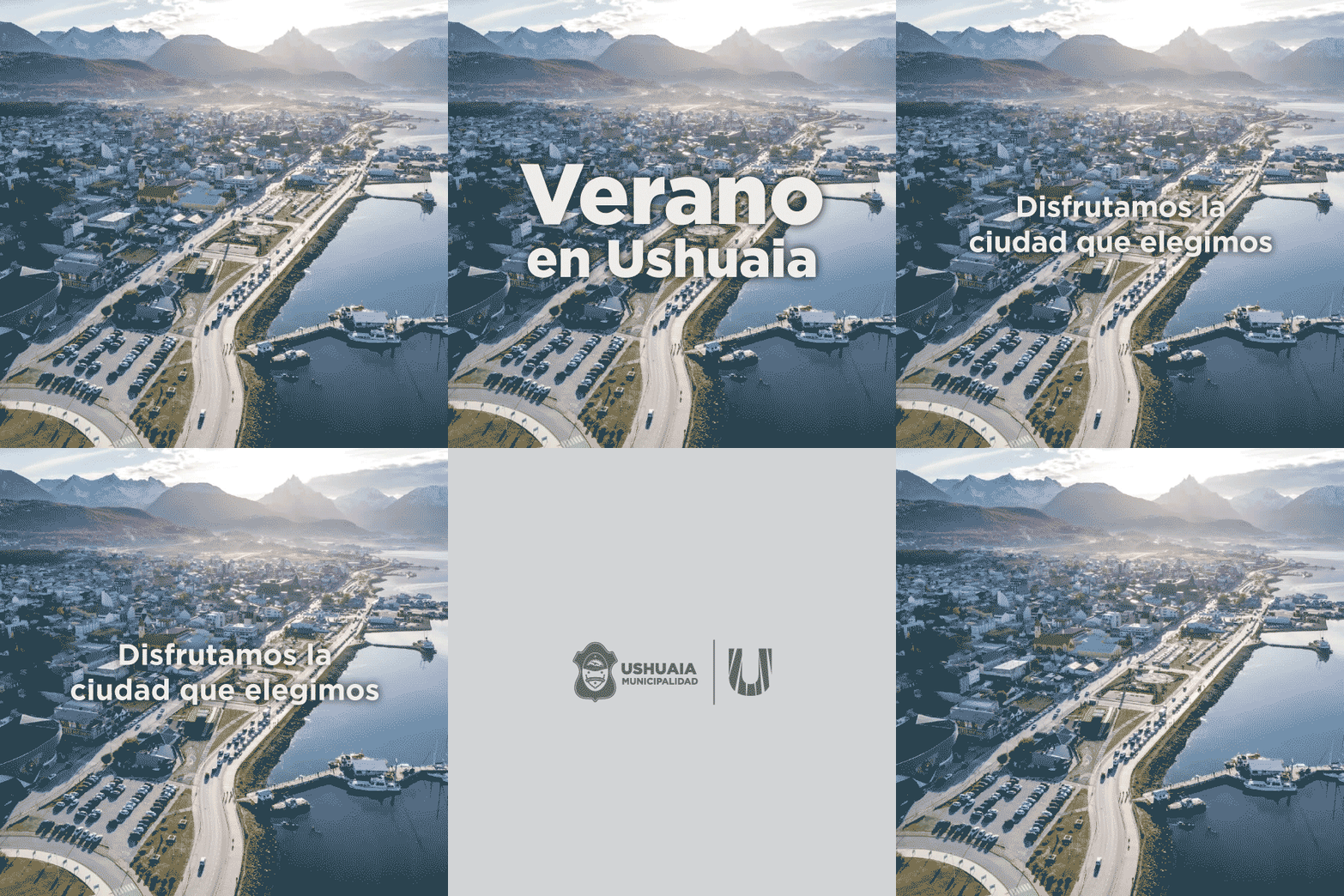
Las políticas de Milei han sido acompañadas por diputados y senadores libertarios, que no emitieron una sola palabra desde que se supo que británicos e israelíes operaban en Malvinas. Tampoco explicaron la intervención del puerto de Ushuaia ni la venta de 38 hectáreas de tierras estratégicas en la ciudad, decisiones que comprometen directamente la soberanía nacional.
Melella: de la distancia al alineamiento
El gobernador de Tierra del Fuego, que hasta hace 48 horas no mantenía diálogo con el presidente, ahora respalda la instalación de una base militar en Ushuaia. Esa decisión coloca a la provincia en el epicentro de un conflicto internacional, donde el verdadero interés de Estados Unidos no es la defensa de la soberanía argentina, sino garantizar un corredor estratégico entre el Pacífico y el Atlántico y una puerta de acceso privilegiada a la Antártida.
El tablero regional
Mientras tanto, Chile y el Reino Unido avanzan con un acuerdo para abastecer a los kelpers desde Punta Arenas, consolidando un esquema logístico que margina a la Argentina. El contraste es brutal: mientras los vecinos cierran acuerdos concretos, en nuestro país los funcionarios apenas se manifiestan por redes sociales, sin emitir un comunicado oficial ni desde la provincia ni desde el municipio de Ushuaia, capital simbólica de la causa Malvinas.
Un discurso a destiempo
Todo lo que se diga hoy llega tarde. La falta de una estrategia clara permitió que el conflicto escalara más allá del petróleo: ahora están en juego los recursos naturales, la pesca, la entrega de soberanía, el acceso a la Antártida y el agua potable. El cambio de discurso de Milei y Melella no logra revertir la percepción de improvisación y entrega. La credibilidad se pierde cuando las palabras aparecen a destiempo, en un escenario donde las decisiones ya comprometen el futuro del país.
Hoy, en un giro abrupto, anuncia sanciones contra una empresa vinculada a un país que él mismo defendió con fervor. El discurso cambia, pero la credibilidad se erosiona: no hay coherencia entre sus gestos previos y esta súbita reacción.
Falklands, Antarctica and Sovereignty: Milei and Melella’s Belated Turn
The sudden shift in discourse by President Javier Milei and Governor Gustavo Melella regarding the Falklands and the installation of a military base in Ushuaia exposes contradictions that arrive too late and lack credibility. For months, both leaders either remained silent or openly distanced themselves, and now, in the midst of an international conflict that transcends oil exploitation, they attempt to reposition themselves as defenders of sovereignty.
Milei: From Denial to Sanctions
- During the World Cup, he banned the display of a banner reading “The Falklands are Argentine.”
- He publicly recognized the supposed “right of self-determination” of the islanders.
- He knew Israeli companies would advance on oil exploration in the islands.
- He proclaimed himself “the most Zionist president in the world.”
- He even declared that Argentina was a “miserable country,” undermining the very nation he now claims to defend.
Today, in an abrupt turn, he announces sanctions against a company linked to a country he had fervently defended. The rhetoric changes, but credibility erodes: there is no coherence between his previous gestures and this sudden reaction.
Silence of the Libertarian Bloc
Milei’s policies have been consistently backed by libertarian deputies and senators, who have remained silent since it became known that British and Israeli companies were operating in the Falklands. They offered no explanation for the intervention of the port of Ushuaia, nor for the sale of 38 hectares of strategic land in the city—decisions that directly compromise national sovereignty.
Melella: From Distance to Alignment
The governor of Tierra del Fuego, who until 48 hours ago had no dialogue with the president, now supports the installation of a military base in Ushuaia. This decision places the province at the epicenter of an international conflict, where the true interest of the United States is not the defense of Argentine sovereignty, but securing a strategic corridor between the Pacific and the Atlantic and a privileged gateway to Antarctica.
The Regional Chessboard
Meanwhile, Chile and the United Kingdom move forward with an agreement to supply the islanders from Punta Arenas, consolidating a logistical scheme that sidelines Argentina. The contrast is stark: while neighbors close concrete deals, Argentine officials limit themselves to social media statements, without issuing any official communication from the province or the municipality of Ushuaia, symbolic capital of the Falklands cause.
A Discourse Out of Time
Everything said today comes too late. The absence of a clear strategy allowed the conflict to escalate beyond oil: now at stake are natural resources, fishing, sovereignty, access to Antarctica, and potable water. The change in discourse by Milei and Melella fails to reverse the perception of improvisation and surrender. Credibility is lost when words arrive out of time, in a scenario where decisions already compromise the nation’s future.
Fuente: www.lalicuadoratdf.com.ar