
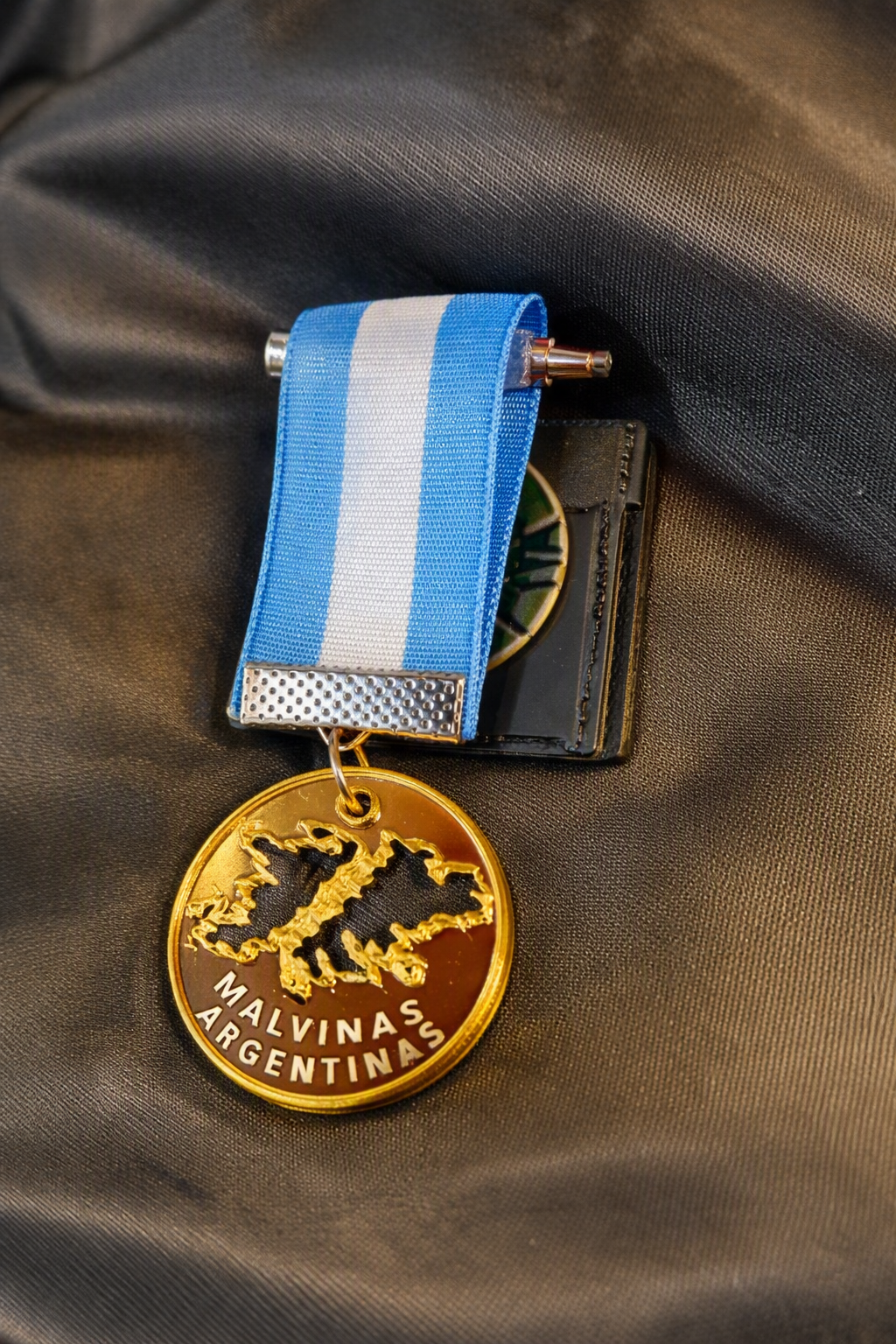
Este símbolo en el pecho es un repudio cotidiano a quienes niegan la pertenencia de las islas y los mares circundantes como parte inseparable de la Argentina. Es también una denuncia contra la política de entrega que permite la instalación de radares británicos en Tierra del Fuego y la depredación de nuestros recursos.
La escarapela no es un adorno: es una invitación a que todos los argentinos la llevemos como recordatorio permanente de que las Malvinas fueron, son y serán argentinas. En Tierra del Fuego, capital nacional de la vigilia por Malvinas, este gesto se convierte en una bandera de dignidad frente a la desmalvinización que se pretende imponer desde el poder.
El repudio se extiende más allá de nuestras fronteras. Chile, a espaldas de la región, negocia con los británicos y exige que se les permita a los piratas navegar por el Estrecho de Magallanes para aprovisionarse en Punta Arenas. Esa complicidad regional refuerza la necesidad de mantener viva la resistencia desde el sur argentino.
La escarapela es también un apoyo a la Selección Argentina, que en el Mundial mostró ante más de mil millones de televidentes la bandera de “Las Malvinas son Argentinas”, pese a las presiones internas para ocultarla. Ese gesto deportivo fue un acto de soberanía cultural que contrasta con la entrega política de quienes gobiernan.
- Símbolo de rebeldía: La escarapela se transforma en un acto de oposición a la derecha argentina y a la política exterior de entrega.
- Memoria activa: Es un recordatorio permanente de los caídos y de la soberanía nacional.
- Denuncia internacional: Expone la complicidad de Chile y la injerencia británica en el Atlántico Sur.
- Resistencia cultural: Refuerza la argentinidad frente a la desmalvinización y la entrega de recursos.
La escarapela de Malvinas no será atada al carro de ningún triunfador extranjero. Es un símbolo de resistencia, de dignidad y de soberanía. Llevarla cada día es un repudio profundo a la entrega cipaya y una afirmación de que las Malvinas fueron, son y serán argentinas, sin discusión.
Versión en Ingles.
The Malvinas Ribbon: A Symbol of Resistance and Repudiation
Wearing the Malvinas ribbon every day, not only on April 2nd, is more than a patriotic gesture. It is a permanent act of opposition and memory in the face of a government that openly admires Margaret Thatcher, the very figure responsible for the 1982 war, and that now allows the exploitation of our natural resources by foreign companies such as Navitas Petroleum in the Malvinas Basin.
This ribbon on my chest is a daily repudiation of those who deny the islands and surrounding seas as an inseparable part of Argentina. It is also a denunciation of the policy of surrender that enables British radars in Tierra del Fuego and the plundering of our resources.
The ribbon is not an accessory: it is an invitation for all Argentines to carry it as a permanent reminder that the Malvinas were, are, and will remain Argentine. In Tierra del Fuego, the national capital of the Malvinas vigil, this gesture becomes a flag of dignity against the “desmalvinización” that power seeks to impose.
The repudiation goes beyond our borders. Chile, behind our backs, negotiates with the British and demands that pirates be allowed to navigate the Strait of Magellan to resupply in Punta Arenas. This regional complicity reinforces the need to keep resistance alive from the southernmost part of Argentina.
The ribbon is also a gesture of support for the Argentine National Team, which at the World Cup displayed before more than a billion viewers the banner “Las Malvinas son Argentinas,” despite internal pressures to hide it. That sporting act was a cultural assertion of sovereignty, in stark contrast to the political surrender of those in power.
- Symbol of rebellion: The ribbon is a daily act of opposition to Argentina’s right-wing government and its foreign policy of surrender.
- Active memory: It honors the fallen and reaffirms national sovereignty.
- International denunciation: It exposes Chile’s complicity and Britain’s interference in the South Atlantic.
- Cultural resistance: It strengthens Argentine identity against the attempt to erase Malvinas from our collective memory.
The Malvinas ribbon will never be tied to the chariot of any foreign victor. It is a symbol of resistance, dignity, and sovereignty. Wearing it every day is a profound repudiation of surrender and a permanent affirmation that the Malvinas are Argentine—without discussion.